We want to know how your gut microbiome can influence how well you respond to a new IBD treatment. As your genes, immune system and even the foods you eat may affect this, it is important to look at the whole picture
Genes are made up of DNA codes which we can find in your body’s cells and RNA, a molecule similar to DNA, then converts this code to control how cells behave.
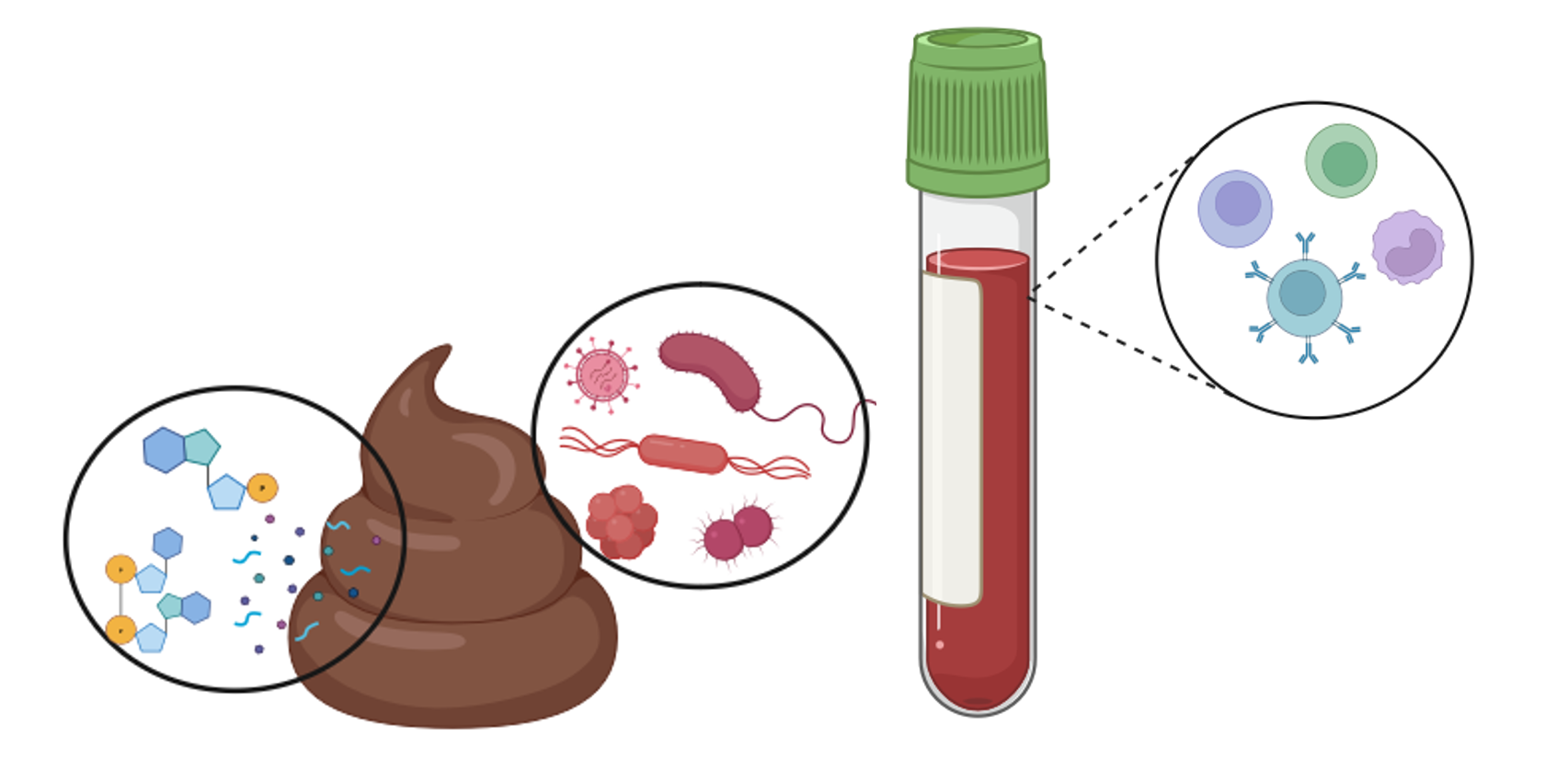
When you give us a blood, stool or biopsy sample, we separate out the DNA and RNA from the samples, analyse it, and store this information safely.
This allows us to identify genes in human and microbe cells, by ‘sequencing’ or ‘genotyping’, that may be important determinants of treatment response. This is similar to reading a book of the human body, where the chapters are human or microbial cells, genes are the sentences and DNA (or RNA) are the words.

We may also look for other things in your blood, stool and biopsy sample now or in future using stored samples. Examples of other research includes looking at:
·Different types of cells such as those involved in the immune system and stem cells
· Proteins such as antibodies
· Metabolites (molecules that form from chemical reactions in your body)
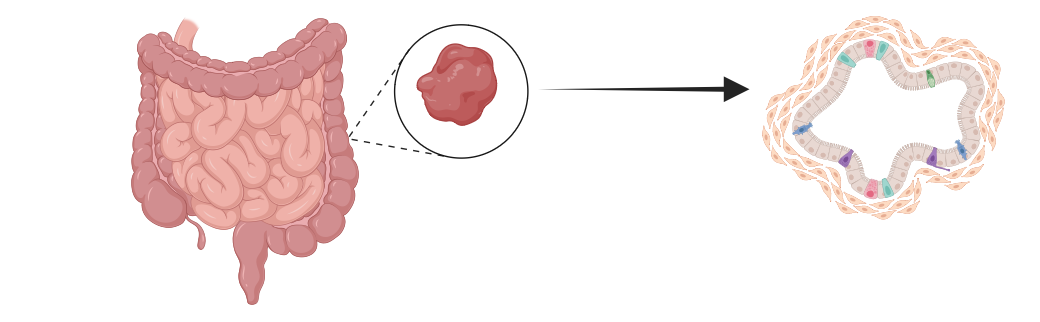
We may also grow some cells from your biopsies, called organoids, which will be used to study how different cells of the intestine behave and interact with one another and/or other microbes, metabolites, medications or food. Organoids are 3D models of cells that grow from the cells that are present in biopsies collected at the time of endoscopy. They imitate the environment inside of the gut.
Future research with organoids could help us to better understand the causes of Crohn’s and colitis and how to develop or test new treatments. Studying organoid models also helps avoid the use of animals for medical research.
We may also contact your local site team and local NHS archives to get access to biopsy or surgical samples that have previously been taken or are taken during this study as part of your standard of care. We will follow all the required processes set up by the NHS archive and ensure your samples are treated with care.